Ilford Station rubbish pickup access solutions: a practical guide for safer, smoother waste removal
If you are dealing with Ilford Station rubbish pickup access solutions, you are probably facing one of those awkward, very real problems that looks simple from the outside and turns messy fast on site. Tight streets, busy foot traffic, limited stopping space, awkward entrances, shared access, rail-side constraints, and bags that somehow multiply overnight - it all adds up. The good news is that the right access plan can turn a frustrating collection into a calm, efficient one.
This guide explains what access solutions actually mean in this setting, how they work in practice, who needs them, and which mistakes tend to slow everything down. You will also find a checklist, a comparison table, compliance guidance, and realistic tips based on the sort of day-to-day issues that crop up around busy transport corridors. Truth be told, most collection problems are not about the rubbish itself. They are about how to get to it without creating a second problem.
Why Ilford Station rubbish pickup access solutions Matters
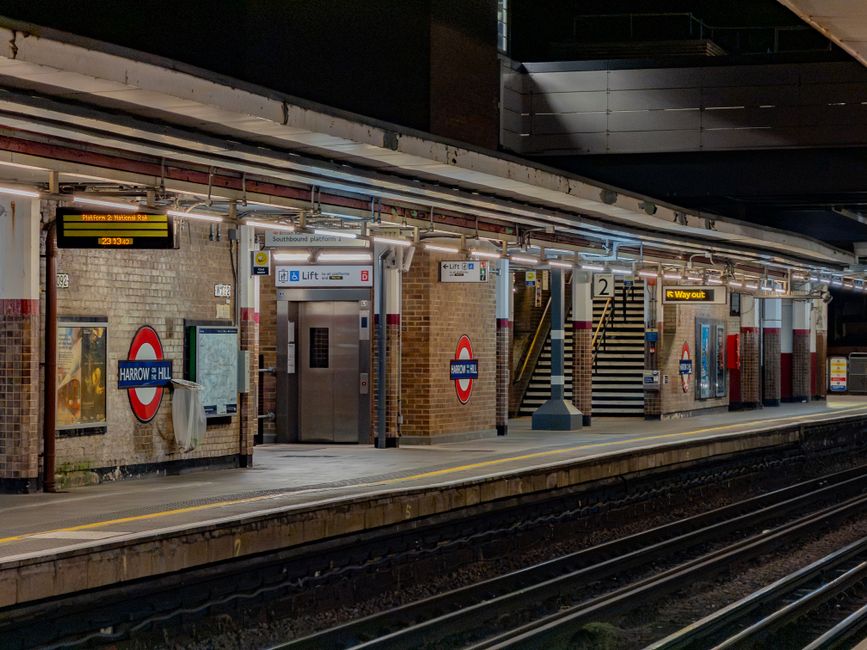
Access is often the hidden part of waste removal, but it shapes almost everything that happens next. At a location near a transport hub like Ilford Station, rubbish pickup may need to work around narrow pavements, peak commuter flow, loading restrictions, short stay windows, and shared entrances. If the vehicle cannot stop safely, or the waste cannot be moved efficiently from the source to the vehicle, even a straightforward clearance becomes slow, expensive, and a bit stressful for everyone.
There is also a practical people issue here. Passengers, neighbours, staff, and nearby businesses do not want a bin bag shuffle across a crowded walkway at 8:30 on a weekday morning. Nor do drivers want to reverse, wait, or improvise in a space where visibility is poor. Access planning reduces friction. It is that simple.
For sites around Ilford, the stakes can be higher than they first look. One missed detail - a locked gate, an unread notice, a bulky item blocking a narrow route - can throw off the whole collection. Good access solutions protect time, reduce disruption, and help make the process feel professional rather than improvised. And let's face it, nobody wants a half-hour wrestling match with an old wardrobe on a public footpath.
If your rubbish removal needs involve broader household, business, or one-off clearance work, it can help to understand how the wider service landscape fits together. Pages such as waste removal, business waste removal, and house clearance are useful context when deciding what kind of support you actually need.
How Ilford Station rubbish pickup access solutions Works
In practice, access solutions are the steps and arrangements that make a pickup possible, safe, and efficient. They are not one single product or rule. They are a mix of planning, timing, vehicle choice, on-site movement, and clear communication. That might sound obvious, but the difference between "we'll sort it" and "we've actually sorted it" is usually in the details.
A typical setup might involve a short vehicle stop, a pre-arranged collection window, a route from the waste point to the vehicle, and a decision about whether items should be carried by hand, wheeled out, or broken down first. For heavier or bulkier waste, access planning becomes even more important. A sofa, fridge, or office chair stack may sound harmless until you try to move it through a cramped doorway and a busy shared entrance at the wrong time of day.
There are usually a few common access layers to think about:
- Vehicle access: Where can the collection vehicle legally and safely stop?
- Pedestrian access: How do staff or residents move waste without blocking people?
- Property access: Are gates, locks, buzzers, keys, codes, or concierge checks needed?
- Handling access: Can the waste be lifted, wheeled, or dismantled easily?
- Timing access: Is there a quieter time that avoids peak congestion?
In some cases, the best solution is not a bigger vehicle or more people, but a better route and a cleaner handover. That little bit of planning can save a surprising amount of hassle.
If your waste includes items that need specific handling, such as old furniture or mixed loads, you may also want to look at related services like furniture disposal, furniture clearance, or builders waste clearance. Those can be particularly relevant when access is tight and items are awkward rather than just bulky.
Key Benefits and Practical Advantages
Good access planning does more than make a pickup quicker. It changes the whole experience. Here is what tends to improve when access is handled properly.
1. Less disruption on busy streets
Near stations, every minute matters. A smooth pickup reduces the chance of blocking pedestrians, buses, deliveries, or neighbouring businesses. That matters to residents too, because nobody enjoys a bin bag bottleneck while trying to catch a train.
2. Faster collections
When the route is clear and the handover is arranged, teams can work efficiently. That usually means fewer delays and fewer return visits. Faster does not always mean rushed - it means fewer unnecessary steps.
3. Lower risk of damage
Careful access reduces the risk of scratched walls, chipped paint, damaged flooring, or broken items during removal. If you have ever watched a bulky item scrape a narrow hallway, you will know exactly why this matters.
4. Better safety for everyone
Safe access helps protect staff, residents, visitors, and passers-by. Trips, lifting injuries, and awkward manoeuvres are all less likely when routes are clear and expectations are agreed in advance.
5. More predictable pricing and scheduling
Where access is clear, estimates tend to be more accurate. The team can better judge how long the job will take and what equipment is needed. That means fewer surprises, which is always welcome.
6. Better recycling outcomes
Well-organised access can make it easier to separate reusable or recyclable items before they are mixed together. If sustainability matters to you, that is a quiet but real benefit. For more on that side of things, see recycling and sustainability.
Expert takeaway: In most station-area jobs, the best access solution is not the most complicated one. It is the one that keeps movement simple, keeps people safe, and leaves no room for guesswork.
Who This Is For and When It Makes Sense
This kind of access planning is useful for more people than you might think. If your waste is near Ilford Station, you are probably already dealing with at least one access complication. Maybe more than one.
It makes sense for:
- households in flats or converted buildings with shared entrances
- shop owners needing quick clearances before opening hours
- offices that want discreet, out-of-hours removal
- landlords preparing a property between tenancies
- contractors dealing with renovation waste, packaging, or trade debris
- students, sharers, and anyone moving out with more stuff than expected
It also makes sense when the waste itself is not huge, but the route is awkward. A small load can become a big headache if the lift is out, the parking is tight, or the only route passes through a crowded shared space. You know the type of day: the weather is a bit grey, the street is busy, and suddenly the old chest of drawers looks twice its actual weight.
If you are comparing service types, the wider property category matters too. A flat with shared stair access may need a different approach than a house, which is why pages like flat clearance, home clearance, and garage clearance can help you think through the right fit.
Step-by-Step Guidance
If you want a smooth collection, think in stages. Nothing fancy. Just a clear sequence.
- Identify the waste type and volume. Is it bagged rubbish, bulky furniture, mixed household waste, or trade material? The answer affects vehicle choice and handling.
- Map the access route. Note the front door, side passage, lift, stairs, gates, and any route barriers. This is where the real job starts.
- Check stopping space. Find out whether a vehicle can pause legally and safely without blocking traffic or footfall.
- Confirm timings. Early morning, lunchtime, and evening can all feel very different near a station. Pick the least disruptive window.
- Prepare the waste in advance. Bag loose items, separate recyclables, and break down flat-pack where possible. It sounds basic, but it saves time.
- Remove access blockers. Move bikes, planters, trolleys, bins, and anything else that narrows the route. Small thing, big difference.
- Agree the handover point. Decide exactly where the collection starts. The front gate? The reception desk? The loading bay? Be specific.
- Keep communication open. If anything changes on the day - lift issue, roadworks, locked entry - let the crew know quickly.
- Check the finish. Once the waste is gone, look over the route for debris or minor damage. Better to spot it immediately.
A good rule of thumb: if you have to explain the access more than once, it probably needs simplifying. That is not a bad thing. It just means the site has a few moving parts.
For jobs involving office rubbish or commercial premises, access often needs to be worked around business hours. If that sounds familiar, office clearance and business waste removal can be relevant starting points.
Expert Tips for Better Results
After enough collections, certain patterns show up. The same little tweaks keep appearing because they work.
- Take photos before the job starts. A few quick images of access points, doors, stairwells, and parking can prevent misunderstandings later.
- Measure awkward items. Not just the waste pile, but the doorway, lift, and corridor. A sofa that "should fit" sometimes very much does not.
- Use the quietest route available. Around station areas, the shortest route is not always the best route.
- Separate recyclables early. Cleaner segregation usually improves efficiency and supports responsible disposal.
- Keep keys, codes, and contact numbers ready. Tiny admin details are the first thing to derail a time-sensitive pickup.
- Ask about dismantling. A simple disassembly can transform an impossible job into an easy one.
One of the simplest improvements, oddly enough, is just having someone available to meet the crew on arrival. It sounds small. It is not small. It can save ten minutes of ringing bells, guessing which entrance to use, and peering through glass doors like a detective in a low-budget drama.
If your waste includes old furnishings or mixed household clutter, consider whether a broader service might be more efficient than handling each item separately. A combined approach can reduce repeat visits and make access easier to manage. Pages like furniture clearance and home clearance are often useful for that reason.
Common Mistakes to Avoid
Most problems around rubbish pickup access are avoidable. That is the frustrating part, really. But it is also the useful part, because once you know the common traps, you can sidestep them.
- Assuming access will be obvious. It rarely is. Even familiar buildings have awkward routes and hidden bottlenecks.
- Leaving waste in scattered piles. Small piles across several rooms slow everything down and create extra lifting work.
- Not checking parking or stopping restrictions. Near busy transport points, this can quickly become a problem.
- Ignoring peak times. A collection that would be easy at 10:30 may be painful at 8:15.
- Forgetting about stairs, lifts, or broken access equipment. One out-of-order lift can change the plan completely.
- Overlooking hazardous or awkward items. Paint tins, batteries, sharp material, and broken glass may need special handling.
A lot of people also make the mistake of focusing only on the item, not the route. In other words, they ask "Can you take this?" before asking "Can you actually get to it safely?" That order matters. A lot.
If you have mixed waste from a refurbishment or garden project, it is worth checking whether a specialist route is more suitable. For example, garden clearance and builders waste clearance can be better matched to those job types than a general pickup approach.
Tools, Resources and Recommendations
You do not need a complicated toolkit, but a few practical items make access planning much easier.
| Tool or resource | What it helps with | Why it matters |
|---|---|---|
| Floor plan or rough sketch | Showing entrances, stairs, lifts, and route constraints | Reduces confusion on arrival |
| Photos of access points | Documenting width, steps, gates, and parking | Improves planning accuracy |
| Tape measure | Checking item sizes and doorway widths | Stops avoidable fitting problems |
| Labels or sorting bags | Separating general waste, recycling, and reusable items | Makes loading cleaner and faster |
| Access contact list | Keeping phone numbers, codes, and site contact details handy | Prevents delays if plans change |
There are also a few website resources worth looking at if you are trying to choose the right type of support. The most relevant usually include pricing and quotes, insurance and safety, health and safety policy, and recycling and sustainability. These pages help you judge not just cost, but also reliability and working standards.
If you are handling a property that is cluttered from top to bottom, a broader approach such as loft clearance or house clearance may remove a lot of the access stress in one go. Fewer trips. Less back and forth. Much calmer.
Law, Compliance, Standards, or Best Practice
For waste access and collection work in the UK, compliance is mostly about safety, lawful disposal, and avoiding nuisance or obstruction. You do not need to become a legal expert to make sensible decisions, but you should know the broad expectations.
Best practice usually includes:
- keeping paths, entrances, and public areas as clear as possible
- using safe lifting and moving methods for bulky items
- checking that waste is handled and transferred responsibly
- making sure any vehicle stopping or loading does not create avoidable danger
- separating potentially hazardous material for appropriate treatment
If an item may be hazardous, damaged, or unusually heavy, treat it with extra care and ask the right questions before collection. For a plain-English overview of this area, the page on what qualifies waste as hazardous is a helpful reference point.
Insurance and safety should also matter to you. A professional collection service should be able to explain how it manages people, property, and waste handling without bluffing its way through the details. If the explanation feels vague, that is worth noting. A clear answer is usually a good answer.
There is also a sustainability angle. Responsible disposal is not just a nice extra. It is part of normal modern waste practice. Sorting items properly, recycling where possible, and reducing unnecessary journeys all help. For background reading, the article on the role of waste clearance in sustainable living fits this conversation well.
Options, Methods, or Comparison Table
Different access situations call for different methods. Here is a straightforward comparison to help you decide what tends to work best.
| Method | Best for | Strengths | Limitations |
|---|---|---|---|
| Manual carry-out | Small loads, accessible routes, short distances | Flexible and simple | Can be slow on stairs or long routes |
| Wheeled transfer | Level access, bins, cages, or trolley-friendly spaces | Reduces lifting effort | Needs suitable surfaces and enough width |
| Pre-dismantled items | Bulky furniture or awkward objects | Much easier to move through tight access | Needs preparation time |
| Timed collection window | Busy roadside or station-adjacent premises | Reduces disruption and waiting | Requires coordination |
| Full clearance plan | Large domestic, commercial, or mixed waste jobs | Most efficient for complex access | Needs more planning up front |
For most station-area jobs, timed collection plus a clear access route is the sweet spot. Not always. But often. If the waste is from an office or business, a dedicated approach through office clearance can be more efficient than trying to adapt a general pickup at the last minute.
Case Study or Real-World Example
Here is a realistic example, kept general and simple. A small property manager near Ilford Station needed to clear mixed rubbish from a flat before a new tenant moved in. The building had one main entrance, a shared stairwell, and limited stopping space outside. On paper, it looked easy enough. In reality, the route was narrow, the lift was not reliable, and the collection time sat right in the middle of the morning rush.
The solution was not dramatic. The team shifted the pickup to a quieter window, asked for the rubbish to be bagged and grouped in advance, and agreed a single handover point near the entrance. A bulky wardrobe was dismantled before collection, and reusable items were separated first. The result? Less time on site, fewer interruptions to neighbours, and no awkward last-minute improvising in the stairwell.
That is usually how good access planning works. It does not need to be flashy. It just needs to be sensible, specific, and slightly boring in the best possible way. Boring is good here.
In similar situations, especially where the property needs a fuller tidy-up, services like flat clearance or home clearance can be a better fit than arranging separate pickups for every room.
Practical Checklist
Use this before the collection day. It will save you time, and probably a headache or two.
- Confirm the waste type and approximate volume
- Check the best access route from waste point to vehicle
- Measure any tight doors, gates, or stair turns
- Clear obstacles from corridors, paths, and entrances
- Make sure keys, codes, or contacts are ready
- Arrange a sensible collection window
- Separate recycling, reusable items, and general waste
- Break down large items where safe to do so
- Check parking or stopping restrictions
- Keep a phone nearby in case plans change
- Ask about hazardous or unusual items in advance
- Do a final walk-through once the job is done
If you can tick most of those boxes, you are already ahead of the curve. And if you cannot? That is fine too. It simply means the job needs a bit more planning before anyone lifts a thing.
For broader preparation advice, the article clear the clutter, clear your path is a useful complement, especially for people dealing with heavy clutter or awkward room layouts.
Conclusion
Ilford Station rubbish pickup access solutions are really about making waste removal workable in a busy, constrained environment. Once you understand the route, the timing, the stopping point, and the handling method, most of the stress drops away. That is the real win. Not just getting rid of rubbish, but doing it without chaos, delay, or avoidable risk.
Whether you are clearing a flat, an office, a shop, or a home with tricky access, the same principle applies: plan the movement, not just the waste. Small improvements in access often create big improvements in speed, safety, and cost. And yes, a little patience helps too.
If you are still weighing up the best route for your property, take a calm look at the access, the waste type, and the timing first. The right choice usually becomes clearer once those three pieces are in place. A tidy pickup can be a surprisingly satisfying thing.
Get a free quote today and see how much you can save.
Frequently Asked Questions
What are Ilford Station rubbish pickup access solutions?
They are the practical arrangements that make rubbish collection possible near Ilford Station, including access routes, stopping points, timing, handling methods, and site preparation. In simple terms, they are the things that stop a pickup from turning into a faff.
Why is access such a big issue near a station?
Station areas are usually busy, space is tight, and traffic or pedestrian movement can change quickly through the day. That makes poor access a bigger problem than it would be on a quiet residential street.
Can rubbish be collected if the vehicle cannot park directly outside?
Yes, often it can, provided the route is safe and practical. The team may carry items from a nearby point, use a different vehicle arrangement, or schedule the job at a quieter time.
What should I do before a rubbish pickup to improve access?
Clear obstacles, bag loose waste, identify the best route, and make sure doors, gates, or entry codes are ready. If possible, send photos beforehand so there are no surprises on the day.
Do I need a special service for bulky items?
Sometimes, yes. Bulky furniture, white goods, and awkward items can need extra planning or a service that specifically handles heavier pieces. Furniture disposal and furniture clearance are often better options than a general pickup if the load is awkward.
How do I know whether my waste might be hazardous?
If it includes chemicals, batteries, sharp materials, damaged electricals, or other unusual items, treat it cautiously and ask for advice before collection. Do not assume everything can be mixed together. That is where problems start.
Is it better to book a specific time window?
Usually, yes. A timed window helps reduce waiting, avoids peak traffic, and makes access planning much easier. It is especially useful near a busy transport hub where the environment changes throughout the day.
What if my building has stairs or a broken lift?
That needs to be mentioned in advance. Stair access, lift issues, and narrow landings can all affect the method used and the time needed. Better to say it early than have everyone discover it on arrival.
Can rubbish removal help with recycling too?
Yes. When waste is separated properly, more materials can usually be handled responsibly. Pages on recycling and sustainability explain the broader approach in more detail.
How do businesses handle rubbish access differently from homes?
Businesses often need quieter timing, discreet collection, and tighter coordination around opening hours or staff movement. Office clearance and business waste removal are often the most relevant service types.
What if the access route is too narrow for large items?
Sometimes the solution is to dismantle the item first, use a different exit, or plan a different collection method altogether. If an item genuinely will not fit safely, forcing it is usually a bad idea. Not worth the dented wall.
How can I get a better estimate for a complex pickup?
Provide photos, measurements, access notes, and details of any restrictions. The more accurate the information, the more reliable the estimate will be. A clear quote is nearly always the result of clear information.
Where can I find more information about the company and its policies?
You can review the about us page, along with the health and safety policy, insurance and safety, and contact us pages for more practical details and next steps.